 Image 1 of 2
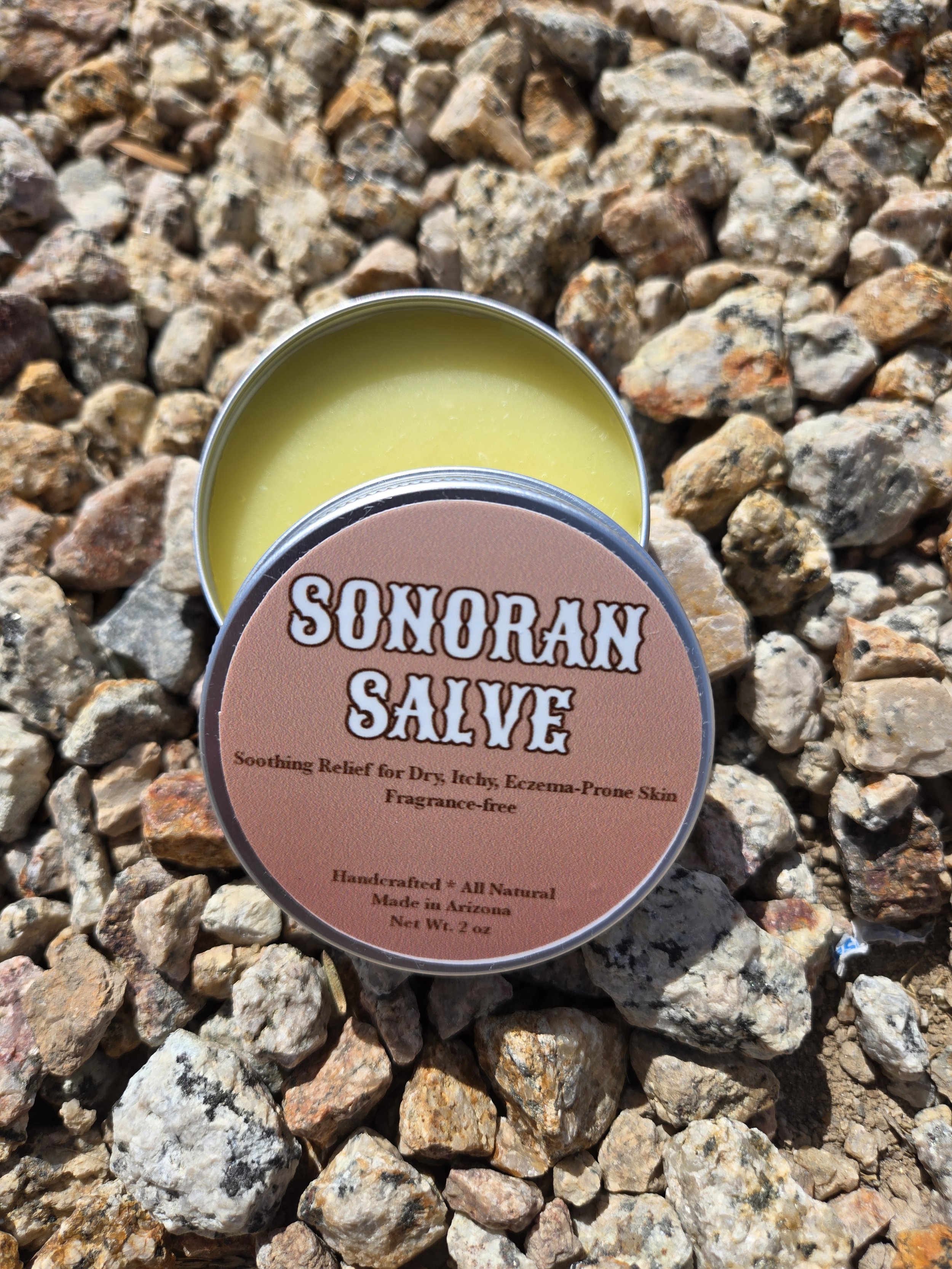 Image 2 of 2
Why This Formula Exists
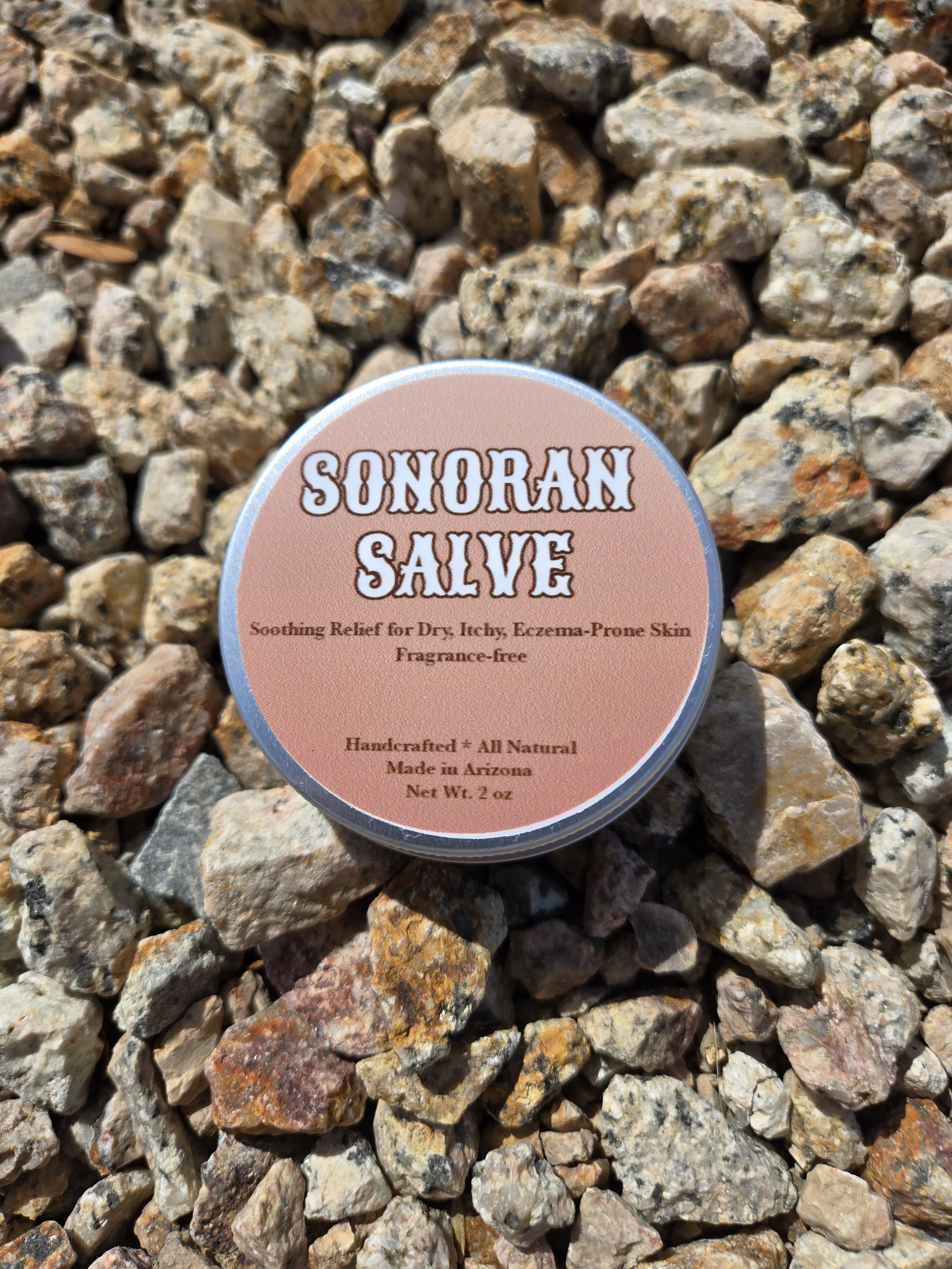
My daughter suffers from eczema. If you’re here, there’s a good chance that you or someone you love does too — so I probably don’t need to explain the cycle; the itching, the flare-ups, the long ingredient lists full of things you can’t pronounce.
I was already making my own salve for dry, desert-wrecked skin (that’s the Original formula — different page, different story). But I couldn’t use that one on her. It has essential oils, fragrance, ingredients that are great for general use, but not ideal for skin that’s already angry.
So I built this one from scratch. No fragrance. No essential oils. Every single ingredient is chosen specifically because research supports its use on eczema-prone skin. I’m not a dermatologist. I’m a dad who reads way too many PubMed studies online at 1 AM. But the formula works, and I know exactly what’s in it.
Fragrance-Free. Actually.
Not “unscented” (which often means they added fragrance to mask other fragrances, Yeah, that’s a real thing). This formula has zero fragrance, zero essential oils, zero “natural fragrance.” If your nose detects anything, that’s just what plant oils and beeswax smell like when they’re all mixed together.
What’s In It (And Why)
Every tin is handmade in small batches in southern Arizona. Every ingredient was chosen for a reason.
Key Ingredients:
• High-Oleic Sunflower Oil — Lightweight, non-comedogenic, and rich in oleic acid to help repair the skin barrier. The high-oleic variety is more stable and less likely to irritate than regular sunflower oil
• Jojoba Oil — Technically a liquid wax, not an oil. It’s the closest match to your skin’s own sebum, so it absorbs without confusing your skin into producing more oil
• Mango Butter — Rich and emollient with a lower allergen profile than shea butter. Chosen specifically because sensitive and eczema-prone skin doesn’t need extra wildcards
• Hemp Seed Oil — One of the few plant oils with an ideal omega-6 to omega-3 ratio for skin. High in linoleic acid, which eczema-prone skin often struggles to utilize properly
• Evening Primrose Oil — A concentrated source of gamma-linolenic acid (GLA). Research suggests eczema-prone skin has difficulty converting linoleic acid to GLA on its own. Evening primrose delivers it directly
• Beeswax — Creates a breathable, protective barrier that helps lock in moisture without clogging pores
• Vitamin E — Antioxidant that supports skin repair and helps keep the formula stable
• Calendula CO₂ Extract — A concentrated botanical extract known for soothing irritated skin. CO₂ extraction preserves the active compounds better than standard infusion methods
• Rosemary CO₂ Extract — A natural antioxidant preservative at a very low concentration. It’s here to keep the oils fresh, not to add scent or irritate sensitive skin
Full ingredient list on every tin. Because you should know what you’re putting on your skin — especially skin that’s already dealing with enough.
FAQ
Hold On — A Treasure Hunting Guy Makes Eczema Salve?
Yep. Buried Expectations is my treasure hunting and desert exploration brand. Sonoran Salve started as something I made for my own beat-up hands after digging in the Arizona desert. When my daughter needed something gentler for her eczema, I went down the research rabbit hole and built this formula. Two different problems. Two different salves. One very stubborn dad.
“Will this cure my eczema?”
No. Nothing cures eczema. This salve is designed to soothe dry, itchy, eczema-prone skin and support your skin’s natural moisture barrier. It’s a tool in your toolkit, not a magic wand.
“Is this safe for kids?”
I made it for my kid. It’s fragrance-free, uses ingredients with low allergen profiles, and has no essential oils. That said, everyone’s skin is different. If you’re unsure, do a small patch test first, and check with your pediatrician or dermatologist if you have concerns.
“How is this different from the Original Sonoran Salve?”
Different formula built for a different purpose. The Original uses olive oil, shea butter, and essential oils — great for general dry skin, but not designed for sensitive or eczema-prone skin. This formula swaps in mango butter (lower allergen risk than shea), adds oils specifically researched for eczema support like hemp seed and evening primrose, and skips fragrance entirely. They share a name and a maker, but they’re built for different jobs.
“Is this just lotion in a tin?”
Nope. Lotion is mostly water with some oil mixed in. This is an anhydrous (water-free) salve — just oils, butters, wax, and botanical extracts. No water means no preservatives needed, and the moisture barrier lasts a lot longer than lotion.
“How long does a tin last?”
Depends on how much area you’re covering and how often, but most people get 4–8 weeks from a tin. A little goes a long way — warm a pea-sized amount between your fingers and apply to the areas that need it.
“What about shelf life?”
About a year when stored in a cool, dry place. The rosemary CO₂ extract and vitamin E work as natural antioxidants to keep everything stable and fresh.
Research References
The following peer-reviewed studies support the ingredient choices in this formula. These are provided for transparency, not as medical claims. Sonoran Salve is a cosmetic product, not a drug.
1. High-Oleic Sunflower Oil
Danby SG, AlEnezi T, Sultan A, et al. "Effect of olive and sunflower seed oil on the adult skin barrier: implications for neonatal skin care." Pediatr Dermatol. 2013;30(1):42-50.
PubMed: https://pubmed.ncbi.nlm.nih.gov/22995032/
Key finding: Sunflower seed oil preserved stratum corneum integrity, did not cause erythema, and improved hydration in adult volunteers — in contrast to olive oil, which damaged the skin barrier.
2. High-Oleic Sunflower Oil (review)
Lin TK, Zhong L, Santiago JL. "Anti-Inflammatory and Skin Barrier Repair Effects of Topical Application of Some Plant Oils." Int J Mol Sci. 2017;19(1):70.
PubMed: https://pubmed.ncbi.nlm.nih.gov/29280987/
Key finding: Comprehensive review of plant oils including sunflower seed oil, jojoba oil, and others for skin barrier repair, anti-inflammatory effects, and wound healing.
3. Jojoba Oil
Pazyar N, Yaghoobi R, Ghassemi MR, et al. "Jojoba in dermatology: a succinct review." G Ital Dermatol Venereol. 2013;148(6):687-91.
PubMed: https://pubmed.ncbi.nlm.nih.gov/24442052/
Key finding: Reviews jojoba’s anti-inflammatory properties and its structural similarity to human sebum, supporting its use in dermatological applications including atopic dermatitis.
4. Jojoba Oil (comprehensive review)
Al-Otaibi WA, Alkhatib MH. "Jojoba Oil: An Updated Comprehensive Review on Chemistry, Pharmaceutical Uses, and Toxicity." Polymers (Basel). 2021;13(11):1711.
PubMed: https://pmc.ncbi.nlm.nih.gov/articles/PMC8197201/
Key finding: Updated review covering jojoba’s pharmacological applications including antioxidant, anti-inflammatory, and skin barrier repair properties, with low toxicity and allergenicity.
5. Hemp Seed Oil
Callaway J, Schwab U, Harvima I, et al. "Efficacy of dietary hempseed oil in patients with atopic dermatitis." J Dermatolog Treat. 2005;16(2):87-94.
PubMed: https://pubmed.ncbi.nlm.nih.gov/16019622/
Key finding: Randomized crossover study found hempseed oil improved skin dryness, itchiness, and reduced dermal medication usage in atopic dermatitis patients, attributed to its balanced PUFA profile.
6. Evening Primrose Oil / GLA Mechanism
Simon D, Eng PA, Borelli S, et al. "Gamma-linolenic acid levels correlate with clinical efficacy of evening primrose oil in patients with atopic dermatitis." Adv Ther. 2014;31(2):180-8.
PubMed: https://pubmed.ncbi.nlm.nih.gov/24435467/
Key finding: Demonstrated that EPO supplementation increased plasma GLA and DGLA levels, correlating with improved SCORAD scores in AD patients. Supports the delta-6-desaturase impairment mechanism.
7. Evening Primrose Oil (clinical trial)
Chung BY, Park SY, Jung MJ, et al. "Effect of Evening Primrose Oil on Korean Patients With Mild Atopic Dermatitis: A Randomized, Double-Blinded, Placebo-Controlled Clinical Study." Ann Dermatol. 2018;30(4):409-416.
PubMed: https://pubmed.ncbi.nlm.nih.gov/30065580/
Key finding: Randomized, double-blind, placebo-controlled trial showing significant EASI score improvement and reduced transepidermal water loss after 4 months of EPO supplementation.
8. Calendula
Givol O, Kornhaber R, Visentin D, et al. "A systematic review of Calendula officinalis extract for wound healing." Wound Repair Regen. 2019;27(5):548-561.
PubMed: https://pubmed.ncbi.nlm.nih.gov/31145533/
Key finding: Systematic review finding evidence for calendula’s anti-inflammatory effects and improved recovery from inflammation phase in wound healing, consistent with traditional medicinal use.
9. Calendula (anti-inflammatory)
Nicolaus C, Junghanns S, Hartmann A, et al. "In vitro studies to evaluate the wound healing properties of Calendula officinalis extracts." J Ethnopharmacol. 2017;196:94-103.
PubMed: https://pubmed.ncbi.nlm.nih.gov/27956358/
Key finding: Demonstrated anti-inflammatory and wound healing activity of calendula extracts through multiple mechanisms including fibroblast stimulation and collagen production.
10. Evening Primrose / Jojoba (combined review)
Vaughn AR, Clark AK, Sivamani RK, Shi VY. "An updated review on efficacy and benefits of sweet almond, evening primrose and jojoba oils in skin care applications." Int J Cosmet Sci. 2022;44(1):1-9.
PubMed: https://pubmed.ncbi.nlm.nih.gov/34957578/
Key finding: Reviews the cosmetic and dermatological applications of evening primrose and jojoba oils, including management of dry skin, atopic dermatitis, and skin barrier homeostasis.
Note: Research on evening primrose oil for eczema is mixed — some large reviews (e.g., Cochrane 2013) found insufficient evidence for oral GLA supplementation, while other trials showed benefit. The topical application of GLA-rich oils in an anhydrous salve format is a different delivery mechanism than the oral supplementation studied in most trials. We include these citations for ingredient-level transparency, not to claim equivalence with the studied protocols.