Keepers of Conscience
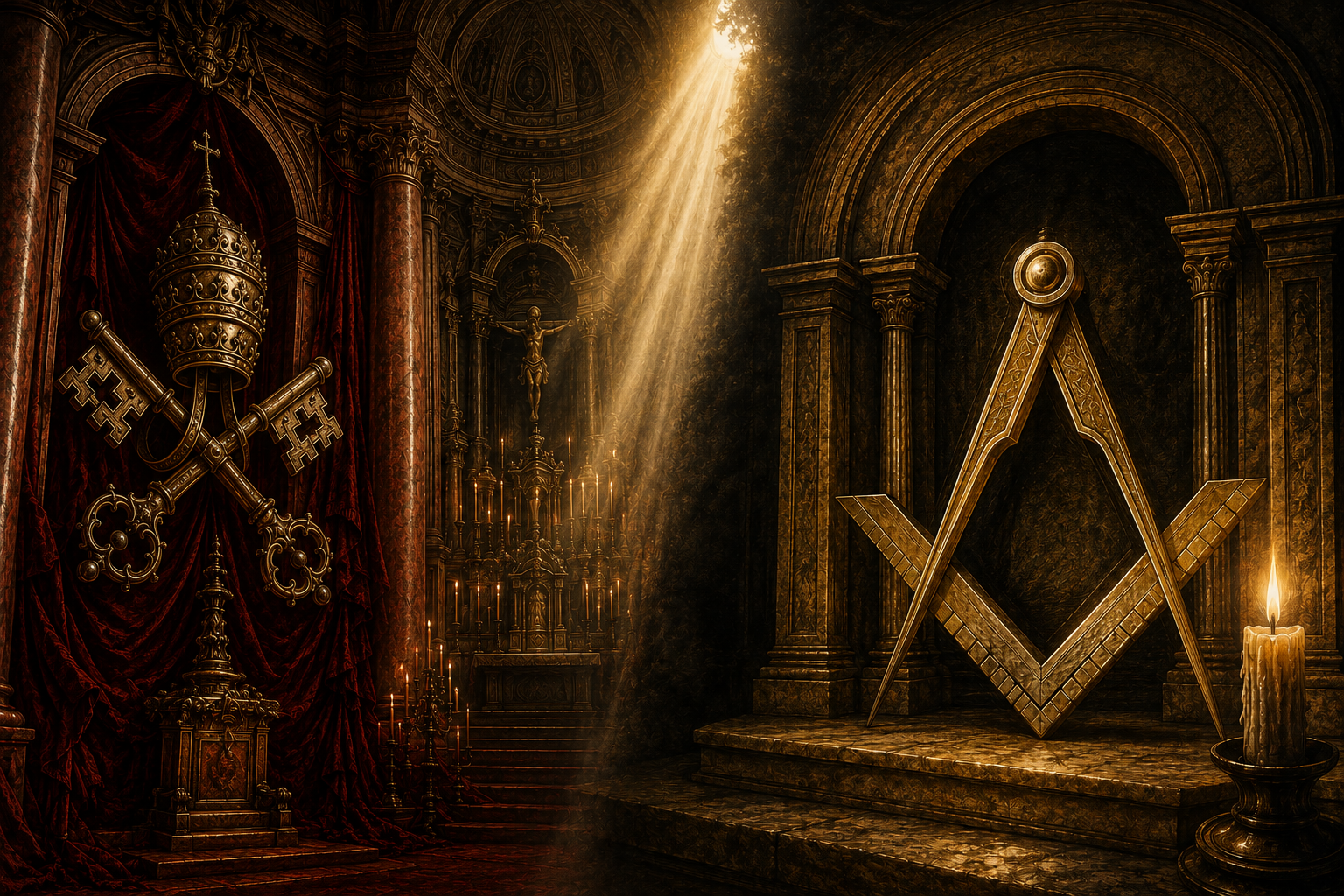
The Question That Began My Search
To begin let me say that my surname is Italian. Miele. It means honey. I can only assume that my ancestors were somehow involved in the honey trade. When I was born about an hour and a half outside of New York City, I was promptly baptized as a Roman Catholic, like my father was before me, and his father before him, on and on I'm sure, back into the days when my family was living in a Greek colony named Agrigento on the island of Sicily. Everybody I know on my father's side is a Roman Catholic, with the exception of some Italian/Irish cousins, who are Irish Catholic. This isn't to say I am an expert in Catholicism, far from it. My mother is a Baptist and I was raised between two worlds, but I am familiar with the religion and have some familial skin in the game.
That said, this piece started out as a desire to find an answer to a question that had been in the back of my brain for some time concerning an accusation that I frequently hear about Freemasonry. Note, this is my quest, which means I am obviously only speaking for myself and any opinions herein are mine alone. As a former non-Mason, I am well aware of the conspiracy theories that are said about the Craft, those of occultism and world domination and all that fun stuff. I don't want to entertain any of them here other than to say I find most of them ridiculous, but I did notice that of all the institutions that regard Freemasonry with suspicion, the Catholic Church is the most adamant and persistent, with its condemnations spanning almost three centuries, and I wanted to know why.
The usual explanations of devil worship or the typical intention behind the word 'luciferian' never satisfied me. None of that matches up with my actual lived experience in the Lodge where men build each other up and support each other in becoming better men. In order for me to take those 'occult' accusations seriously, that would mean that the well-mannered, well-meaning family men that I had been sharing Lodge with for the last decade are secret devil-worshippers, or that they were unintelligent, unwitting participants in a hellish vision for a one-world government, suggestions I find, as I said, ridiculous. The animosity toward the Fraternity then, in my reasoning, has to be based on something else. But what?
After spending some time with this, it seems to me that the Church's quarrel with the Craft is not at its root about the occult at all, which is probably the accusation I hear the most. It is about a man’s conscience, and who holds authority over it. The Catholic Church, for the whole of its history, has claimed to be the one road between a man and God, the sole keeper of truth and the necessary mediator of a man's very soul, and for much of its history it defended that position violently. Freemasonry, without ever setting out to oppose the Catholic Church, does something the Church cannot abide. Masonry gathers good men of every faith and every country as equals and treats each man's conscience as his own to govern. It hands a man back to himself and lets him decide what’s best for his own soul. That, I have come to believe, is the true root of three centuries of condemnation.
A Swift and Total Condemnation
On the twenty-eighth of April, 1738, Pope Clement XII issued a papal bull titled In Eminenti Apostolatus, and with it the Catholic Church formally condemned Freemasonry. Any Catholic who joined a Lodge was to be excommunicated, cut off from the sacraments and from the Church itself. Absolution was reserved to the pope alone. The condemnation still exists today.
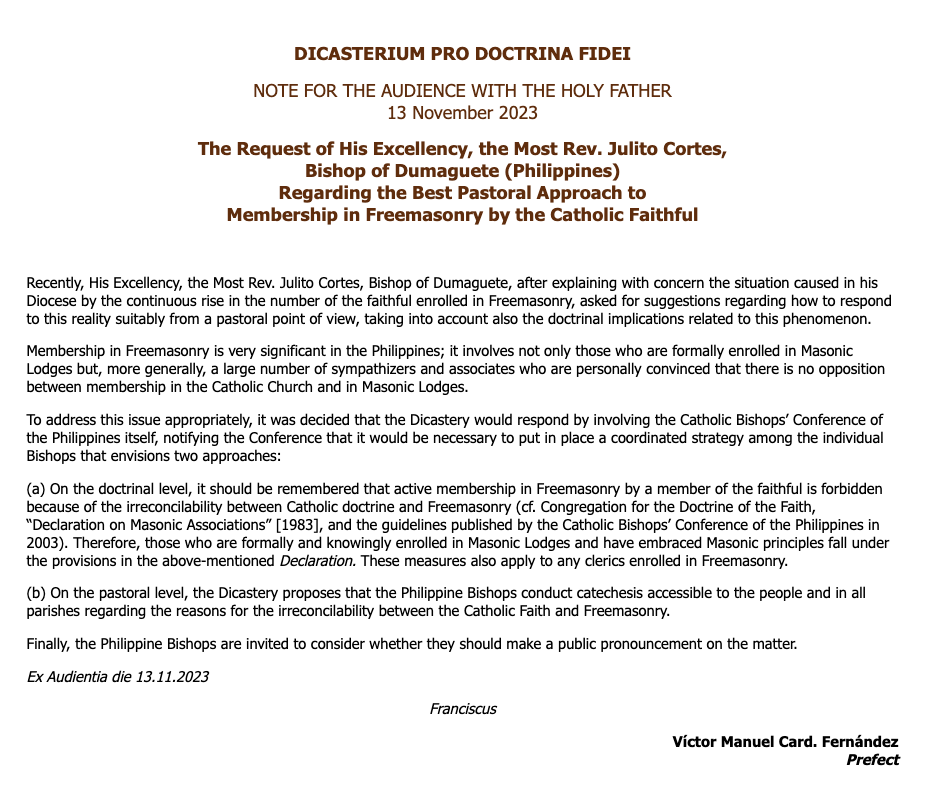
A 2023 condemnation taken from the Vatican website.
The first Masonic Grand Lodge had been founded in London only in 1717. Anderson's Constitutions, the document that gave organized Masonry its modern shape, appeared in 1723. So the Church moved against the Craft barely two decades after it officially took form, and only fifteen years after it had a rulebook. Monsignor Ernest Jouin, a French Catholic priest, in a speech he gave on December 8, 1930 wondered if any heresy in the history of the Church was ever met with so swift a condemnation. The answer is essentially no. Rome took centuries to define its response to many an ancient ‘error’ as it saw things. It only took fifteen years to move against the Masons.
My question was now, why?
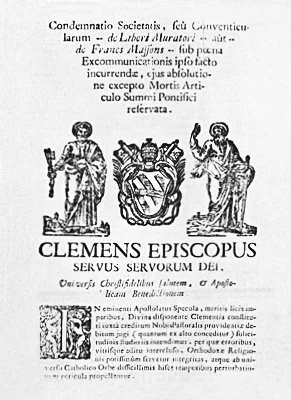
In Eminenti Apostolatus
One of many Papal Bulls that condemns Freemasonry.
The Reasons Rome Gave
In, In Eminenti Apostolatus, Rome gives four reasons for condemning Freemasonry.
The first: Clement warns that Freemasonry threatens to break into the household of God like thieves, like "foxes seeking to destroy the vineyard." That’s it. That’s the whole of the first claim.
The second: Lodges gather "men of any Religion or sect," satisfied with mere natural probity, and bind them together as brothers. For now it is enough to notice that the offense here is not that Masons do evil. The offense is that Masons of different faiths treat one another as equals. We will return to why that terrified Rome in a bit, but first...
The third: Secrecy. Lodges bind their members by oath to silence about what passes between them. That silence, Clement reasons, is in and of itself damning. "It is in the nature of crime to betray itself," he writes, and therefore the secrecy of the Lodges has made them objects of suspicion to all upright men, "for if they were not doing evil, they would not have so great a hatred of the light." In other words, honest men have nothing to hide.
The fourth: Societies of this kind disturb the peace of the state and endanger the salvation of souls. Basically, if the secrecy proves guilt, then the guilty gathering must be a danger.
So there they are, the four original charges against Freemasonry. The accusation of thievery appears to me to be only name-calling and attempting to instill fear in its readers. I don’t think we shall spend too much time on it here. The mixing of faiths we have set aside for the moment, and the disturbance of the peace is only an inference from the secrecy. What gives the document the appearance of justice in this condemnation rather than mere hostility, is the argument about secrecy. If Masons weren't doing evil, they wouldn't shut the doors to their meetings.
Having condemned the Masons for hiding, while at the same time keeping his Church council doors locked to the public, Clement turns to what is to be done with them. He commands that bishops and "inquisitors for heresy" shall seek out the members of these societies and "proceed against" them as men gravely suspected of heresy. Then he grants these inquisitors the power to call upon "the aid of the secular arm" in pursuing and punishing them. The secular arm in this case is the machinery of the state placed at the disposal of the Inquisition, the courts and the jailers and, in that age, the fire.
To sum that up, on one page, the Church declares that honest men do not hide, and that the Masons' secrecy is proof of their evilness. On the next, the Church hands the inquisitor and the executioner the authority to hunt those same men down, thereby answering the question as to why men had to hide in the first place.
Men Of All Faiths
Let’s come back to the idea that the Church condemned the Lodges because they gathered men of every faith and bound them as brothers.
The Church did not charge the Masons with cruelty, or theft, or violence, or blasphemy. It charged them with fellowship. The offense is that a Catholic and a Protestant and a Jew knelt in the same room, called one another brother, and sought the divine together on the ground of their shared decency rather than their shared creed. To most men this would sound like a description of virtue, but not to Rome.
Extra ecclesiam nulla salus. Outside the Church there is no salvation. Christ was the sole mediator, the Church was his body on earth, and the grace that saved a soul flowed through that body and through no other channel. A man did not reach God by being good or by building his internal temple. He reached God through the external Church. Every other path led nowhere, or worse.
If salvation runs through the Church alone, then a room where men of every faith meet as equals, is a quiet heresy because it treats those other faiths as though they were not damned. The Lodge simply behaves as though a man's standing before God were his own affair, settled between him and his own conscience, and not the exclusive property of one institution. It treats the Protestant and the Jew not as souls to be corrected, but as brothers already whole on their own journeys. In doing so it declares, without ever saying a word against Rome, that a good man is a good man whatever altar he kneels at.
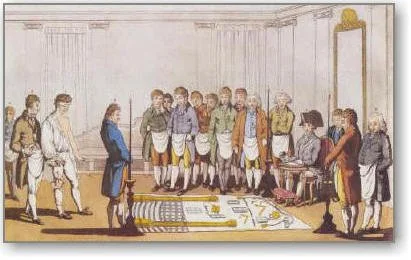
A depiction of a French Lodge in session.
The Church calls this indifferentism. The treating of all faiths as though the difference between them did not decide a man's fate. A Church whose entire authority rests on being the one necessary road cannot survive demonstrations to the contrary, and that’s what the Lodge was to them. It was living proof that their monopoly over conscience was unnecessary. Here were men, sober and upright, bound in genuine brotherhood, finding meaning and communion and seeking the light of the divine without the Church mediating any of it. The condemnation of 1738 was not a response to anything the Masons had done to the Church. It was the recognition, swift and sure, of what the Lodge really was, a place where a man's conscience was his own.
What Happens to Those Who Are Seen
The Lodge learned to keep it’s silence because Masonry is full of brilliant men who study history and have the benefit of afterthought.
In the first centuries of Christianity, before the Church had hardened its faith into a single orthodoxy with a single hierarchy, the Gnostics were a Christian sect who held that a man could know God directly. The word they used was gnosis, meaning knowledge, not the secondhand knowledge of doctrine received from an authority, but the firsthand knowing of the divine encountered within oneself. They taught that the spark of the divine was already present in every person, and that salvation lay in awakening to it, not in inviting it in or submitting to an institution. For precisely that reason it could not be allowed to stand. As the Church consolidated its authority, the Gnostic writings were branded heresy and ordered destroyed. So thoroughly were they destroyed that for sixteen centuries we knew these Christians almost entirely through the propaganda of the men who condemned them and destroyed their religious practices. That is, until the Nag Hammadi texts were discovered.
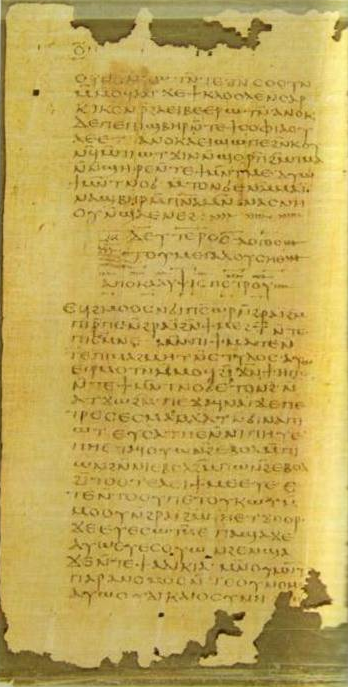
A broken page of manuscript found with the Nag Hammadi texts.
In the hills of southern France, in the twelfth and thirteenth centuries, there lived a people who too had arrived at their own understanding of God, the Cathars. They were also Christians of a kind, but they had not come to their faith through Rome. They held that the spirit and the light were good and that the material world was the domain of darkness, and they lived by that conviction with an austerity that shamed the wealthy clergy around them. Like the gnostics, they revered their own inner light and viewed it as a direct connection with the divine.
In 1209 Pope Innocent III called a crusade against the Cathars. When eventually the crusaders reached the town of Béziers, they faced a conundrum. The town held Catholics as well as Cathars and the soldiers could not tell them apart. Kill them all, the papal legate is said to have answered. God will know his own. The town was then burned to the ground and the dead numbered in the many thousands.
Later, at the mountain fortress of Montségur in 1244 during the same decades-long campaign against the Cathars, some two hundred Cathars who would not renounce their faith were led down and burned alive, together on a single great pyre. They were the last of their kind. An entire people was erased because they revered their own inner light, their own inner connection to the divine as they saw it, without going through the authority of Rome. Raphael Lemkin, the man who would later coin the word genocide, reached back to this crusade as one of the clearest examples of it in all of religious history.
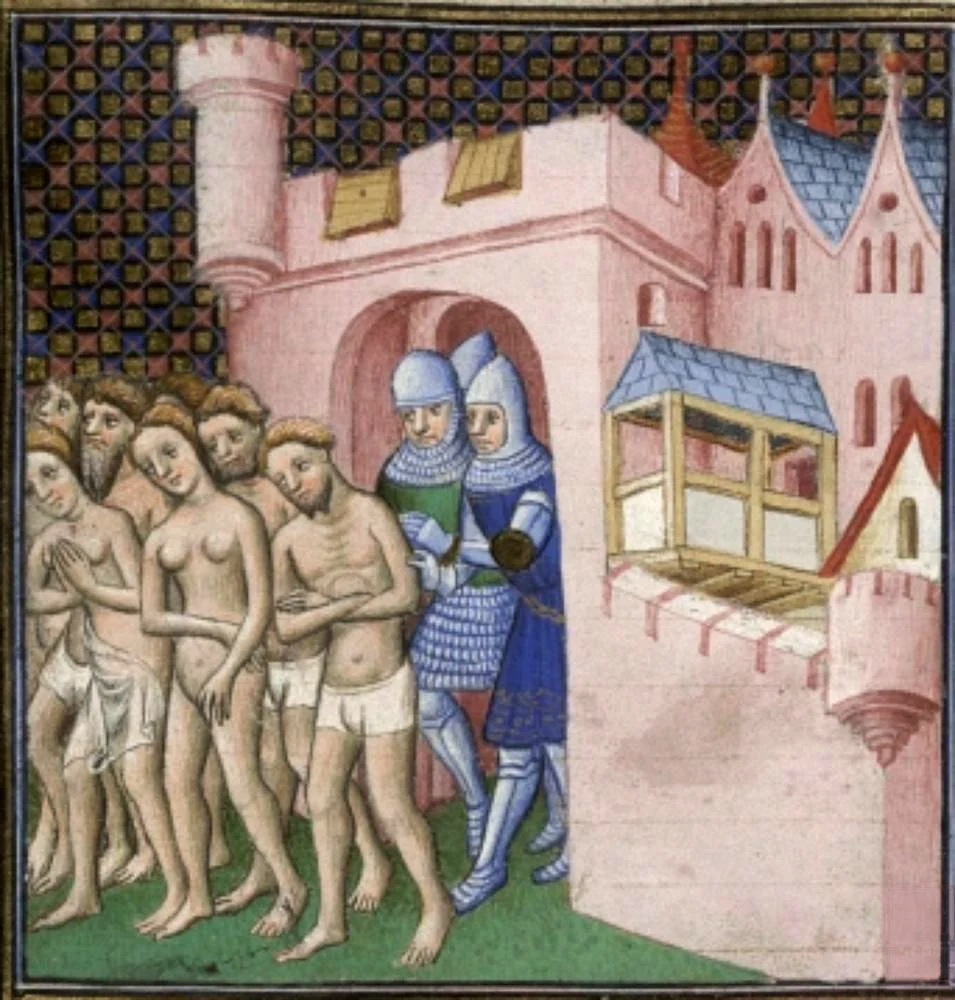
Expulsion of the Cathars from Carcassonne in 1209.
That was only the beginning, unfortunately. The machinery built to hunt the Cathars did not disband when they were gone. It became the Inquisition, a permanent apparatus for the detection and punishment of belief. The Inquisition existed to police the boundary of what a man was permitted to think about God. It did not care what a man did nearly so much as what he believed, and it reserved its terror for those who believed wrongly. A tribunal that answered to Rome could summon a man on suspicion of wrongthink, extract his confession by torture, and hand him to the secular authorities to be burned alive, all for the crime of holding that the divine could be approached by some path the Church had not surveyed and approved. For centuries this apparatus operated across Europe and, in time, across the ocean in the Church's new dominions, and it taught a lesson that sank into the marrow of every man who reached for God on his own terms.
I could fill a book with these genocides and tortures perpetrated by the Church, but we have seen enough to develop a pattern. The Gnostic with his inner connection to the divine, the Cathar with their inner light, the Beguines and many others, in every case the offense is ultimately at its root the same. They were reaching toward the divine, or were accused of it, without passing through the Church first, and in each and every case the Church’s answer was the same, to deliver to the heretics the hellfire the Church was supposedly the sworn enemy of.
We might now have a bit of an idea why the Masons, with their self-actualization and focus on inner growth and inner light, might have decided to go into secrecy. They were carrying forward previously open and not-secret traditions that had been proven to result not only in death, but genocide in Catholic controlled lands. Masons went into secrecy not because their deeds were evil, but because they had watched, for hundred of years, exactly what the Church did to those who didn’t keep that light under a bushel.
The Keepers in Stone
Where did the mysteries go?
The Gnostic tradition of inner light was stamped out. The same can be said about the Cathars. There was one carrier of the inner light that Rome could not touch however, the builders. Since Egypt raised its pyramids and Solomon raised his temple, the mysteries have been built into stone by the hands of stonemasons. So when the Church rose up to hunt the keepers of the inner light, of the direct inner connection to the divine, it found there was one it could not burn. Rome needed cathedrals, and only the builders knew how to raise them.
A stonemason, in the ages of faith, was the possessor of a body of knowledge that almost no one else on earth held, the geometry by which a building of stone could be raised toward heaven without falling down. That knowledge was sacred. To lay out a cathedral, or a temple, or a pyramid, was to work in proportion, in ratio, in the figures that their ancient predecessors had already understood as the hidden grammar of creation. The master masons of the Gothic age built their cathedrals upon the vesica piscis, the almond form born from two intersecting circles, and upon proportions they regarded as the signature of the divine in matter. They were, in the words of one study, building the geometry of the divine into stone and glass.
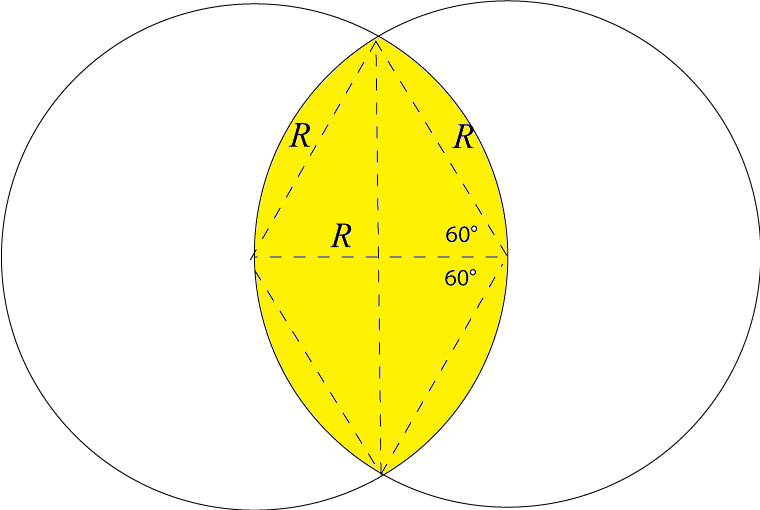
The vesica piscis and some of the geometry that can be found within it.
The stones they left behind however, tell us that builders themselves held the sacred mysteries too. The Mason's true inheritance, alongside Geometry, was ritualistic initiation, the lessons imparted in it, the passing of a man by degrees through preparation, trial and revelation, and the building of the temple made without hands, which to many Masons is an inner journey toward the inner light. That, along with the geometry, is the oldest thing the Craft carries forward, and it binds the Craft to everyone the Church had been burning alive for centuries.
The ancient rites of Eleusis and Egypt that ran for the better part of two thousand years, were not doctrines. They were initiations. The candidate was prepared, purified, led into darkness, and brought through a symbolic death into a new life. At the heart of nearly all of them stood one drama, a figure struck down and raised again. Osiris is murdered and restored. Persephone falls into the underworld and returns. The initiate did not hear doctrine about the passage from darkness to light. He walked it, and the aim of the whole ordeal was direct knowledge of the divine. This is the exact thing the Church could not tolerate, and the exact thing it thought it rid the world of when it destroyed the gnostic texts and exterminated the Cathars.
The central ritual of Freemasonry is the same drama. In the third degree the candidate takes the part of Hiram Abiff, the master builder of Solomon's Temple, struck down by thieves and then raised again by the hand of a master. It signifies a dramatic death and raising, which is an internal process. Albert Mackey compared the Masonic initiation directly with the ancient rites of Egypt, named the same threefold pattern of purification, initiation, and perfection in both, and saw in the raising of Hiram the old figure of Osiris slain and restored. And it is possibly more than just a coincidence that the Great Pyramid is divided into three sections with a giant archway leading you into the third chamber which contains a sarcophagus with no lid. The deepest mystery of all time, carried now in a Lodge.
No one can prove an unbroken ritual handed down intact from a temple on the Nile to a Lodge in Missouri, and much of the ritual as Masons now practice it took its modern form only in recent centuries, but the core of the thing is ancient, the initiation by degrees, the passage through darkness, the death and the raising, the lessons therein, and the pursuit of a knowledge that has to be experienced rather than received. That shape is the shape of the mysteries. That core is ancient. What the Masons were keeping secret and carrying forward was how to bring a man to his inner light. Even the Holy Bible has within it’s pages more than one story of death and rebirth. The pattern is there for all to see.
The stonemasons who raised the cathedrals, the builders who laid out Solomon's temple in the sacred proportions the Craft still reveres, the architects of the temples and pyramids of the ancient world, all worked from the same trestle-board, nature. In every age, the men who built the temples had to hold and know the sacred design, and the sacred design was always about more than building physical temples. It was the knowledge of the relationship between man, his interior, the cosmos, and the divine. It was knowledge of how to build the inner temple. That knowledge has a keeper, and its keeper has always been the Mason, in all cultures, in all places, in all times. You cannot build the mystery into the temple unless you are yourself carrying the mystery. The builder is the keeper, necessarily, always, both literally and metaphysically.
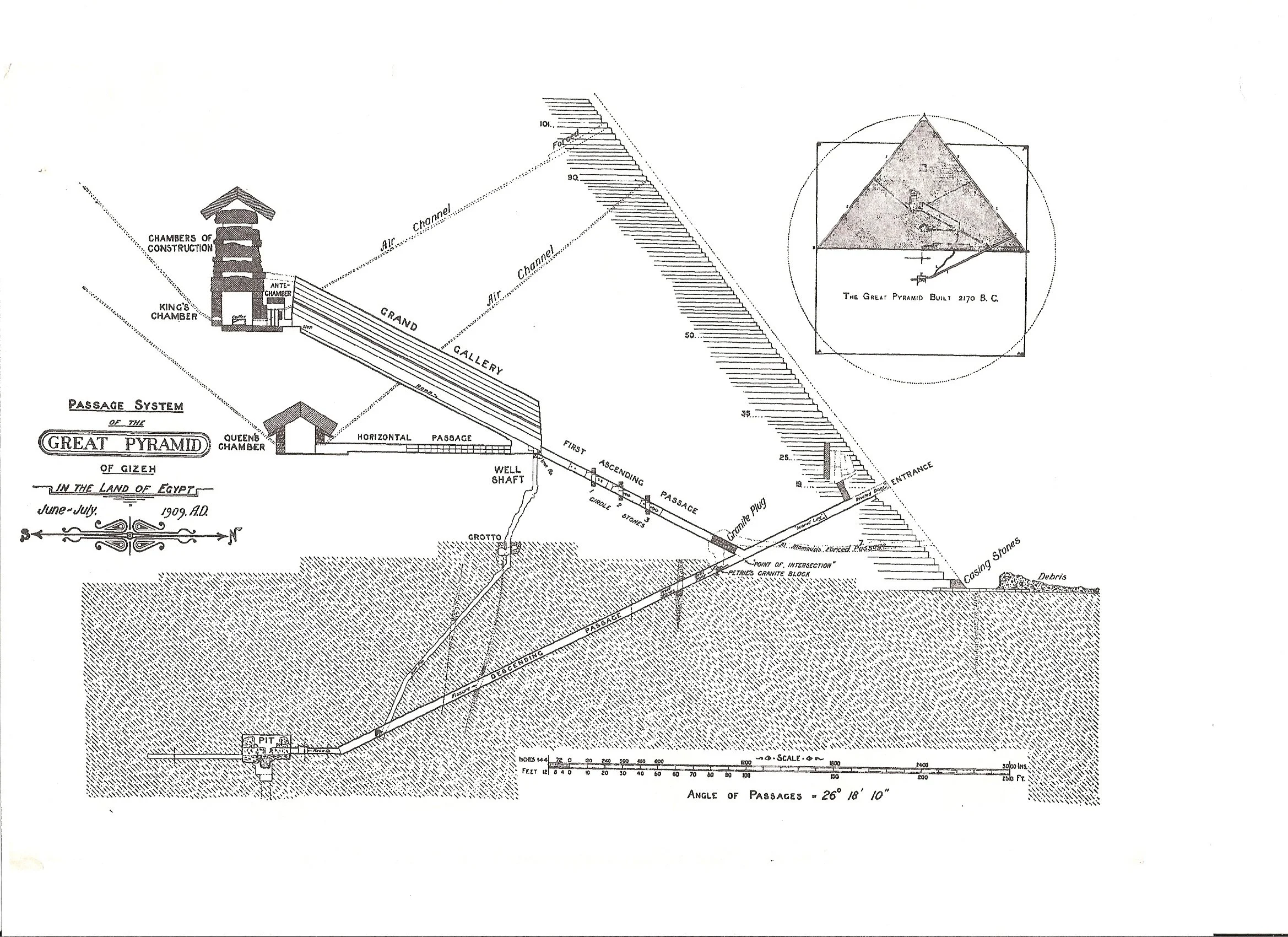
Interior passages of the Great Pyramid of Gizeh as studied by John and Morton Edgar in 1909.
The men who raised the great sacred houses of the world did not share a blood or a creed, either. The builders of the beautiful geometrical mosques in Iran worked in one civilization and one faith. The builders of the Tabernacle and of Solomon's temple in another, and the builders of the Gothic cathedrals in yet another, separated by thousands of miles and thousands of years. Yet across all of them runs the same mystery, the same reverence for sacred proportion, the same treatment of building as a holy act, the same understanding that a temple raised in the right measure is a model of the cosmos and of the soul. The keepers of that knowledge were Egyptian and Hebrew and Greek and Arab and Christian, and it did not matter, because the light they carried belonged to everyone, and they gave it to everyone in stone when they couldn’t say it out loud. It’s no wonder that the men who carry these mystical traditions, across cultures, languages and time, would call each other brother.
At this point it should be clear that the temple Masons built of stone was never the final object. It was the image of your internal temple. When Jesus stood in the temple at Jerusalem, he told those around him to destroy that temple and in three days he would raise it up, another death and rebirth. The Gospel of John explains that he had spoken not of the building at all, but of the temple of his body. Elsewhere Jesus told them that the kingdom of God is not found in any place one could point to, but is found within you. The underlying message beneath both is the same. The sacred is not out there, in the stone, in the sky, in the institution, in the building raised by hands. It is within. The temple is man. The temple is you. So when the age of cathedrals passed and the operative lodges became speculative, the Craft finally revealed openly what it had been doing all along symbolically. It set down the physical chisel and took up the work of raising the temple within, the shaping of the rough man into something fit to hold the divine.
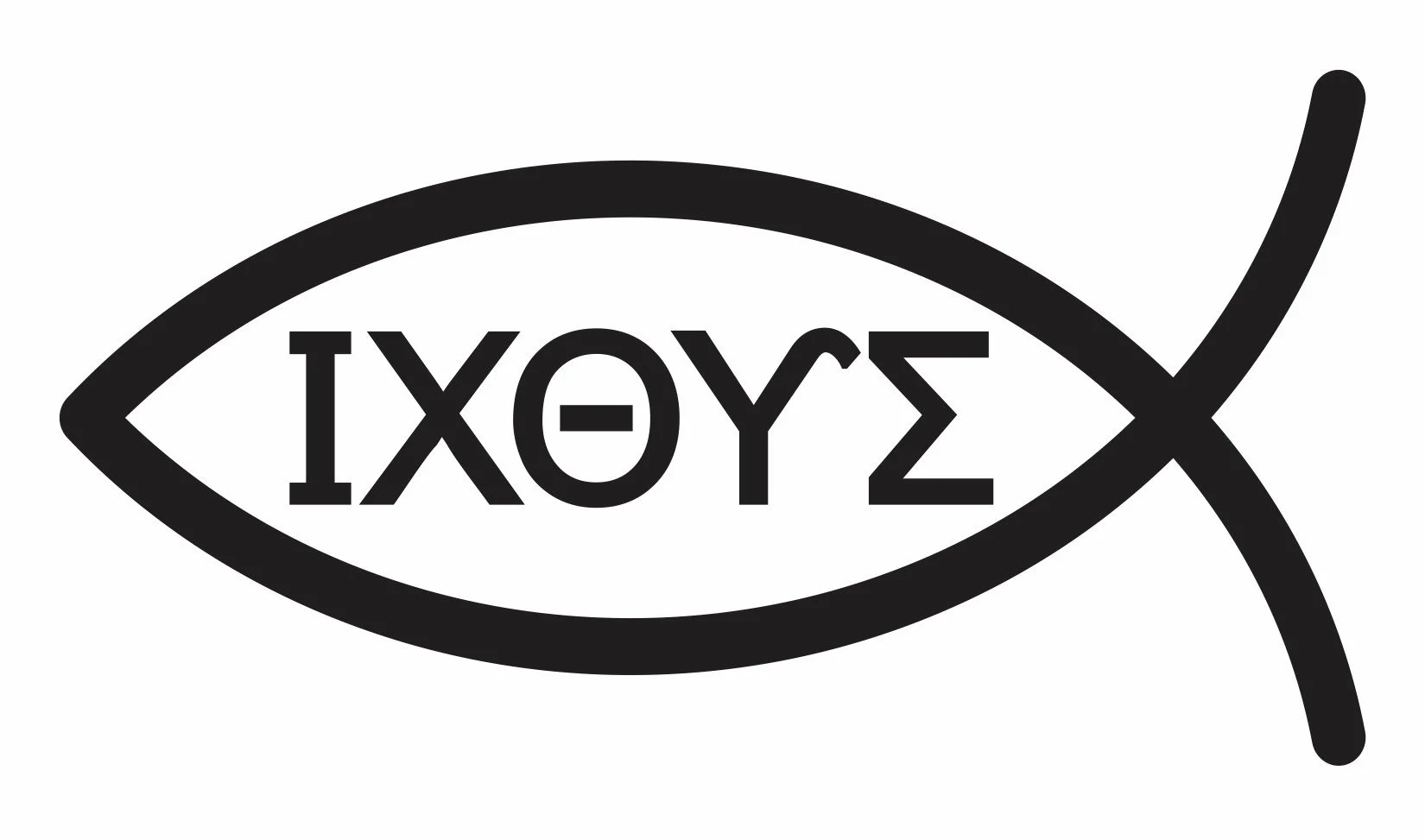
The original symbol of Christ, the vesica piscis.
Rome had hunted this knowledge for a thousand years and never caught its truest keepers, and its truest keepers, funny enough, were the men they were paying to build their cathedrals. The mysteries it thought it had burned out of the Gnostics and the Cathars had been riding alongside them all along, encoded in the stone above their heads, representing beliefs held by brothers of every nation who had never stopped carrying the light. When those guilds became the public, speculative Lodges we know today, and the keepers of the mysteries stepped out from behind the tyled door into the open as a Fraternity of all faiths devoted to building the temple within, the Church knew exactly what it was looking at. It was not looking at a new heresy. It was looking at the oldest one, one that predates their definition of heresy by thousands of years. The keepers of the light it had never managed to catch, were out of the scaffolding at last and standing in plain sight.
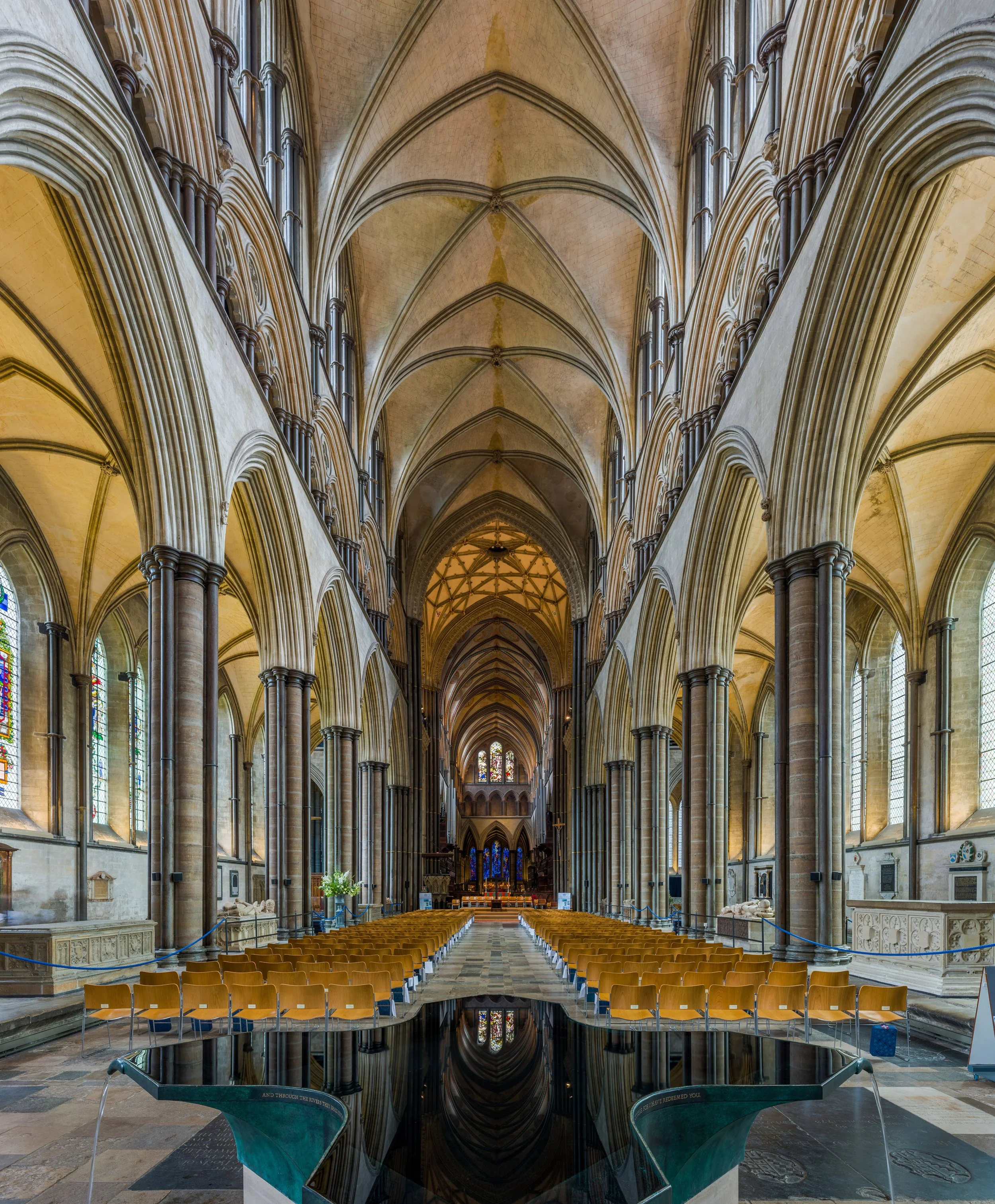
Salisbury Cathedral. You can see the vesica piscis outlined in the ceiling and columns.
Conclusion
So I have my answer.
The Catholic Church does not fear the Mason because he worships devils. It fears him because he is the last living heir of something very powerful the Church tried to kill. For a thousand years Rome held that the road to God ran through one door, its own, and it hunted down anyone who thought otherwise. One by one they were erased, killed until the Church could believe the work was done. Then, in 1738, it looked up and saw the old enemy still standing, gathered now into a Fraternity of every faith, on every continent, calling itself the Craft, teaching once more that a man may seek the divine directly and that his conscience is his own. More importantly for the Church’s temporal goals, many in the Craft had also taken on the idea of the separation of Church and state, and were were putting those ideals into effect across the world, which will be the focus of Part II.
The Church condemned the Fraternity within fifteen years, faster than it had condemned almost any heresy in its history, because it already knew exactly what it was looking at, and it was scared. That is the whole of it. Who owns the inner life of a man? Who owns a man’s thoughts? Who owns a man’s connection to his God? The Church answered that the Church does. The Mason answers that the man does.
The men who join a Lodge are not plotting anything. Of course this is a general statement and I cannot speak to everyones intentions, but for the most part, they are seeking and traveling toward the light in the best way they know how. Jesus said it best. Ask, and it shall be given. Seek, and ye shall find. Knock, and it shall be opened unto you. And that is what we are doing. The light belongs to whoever seeks it, no mediator needed.
There is a second half to this story. Having failed to burn the inner light out of man’s world, the Church would live to watch the men who carried that light strip from it, piece by piece, the earthly power it had spent centuries amassing. Stay tuned for the fall of the Church in Spanish America.
If you would like to support my work, please consider buying me a coffee. Thank you!

Proudly show that you are a keeper of this light with this bad boy! You will absolutely turn head in this beauty of a tshirt. You might even get some free drinks. Try it!
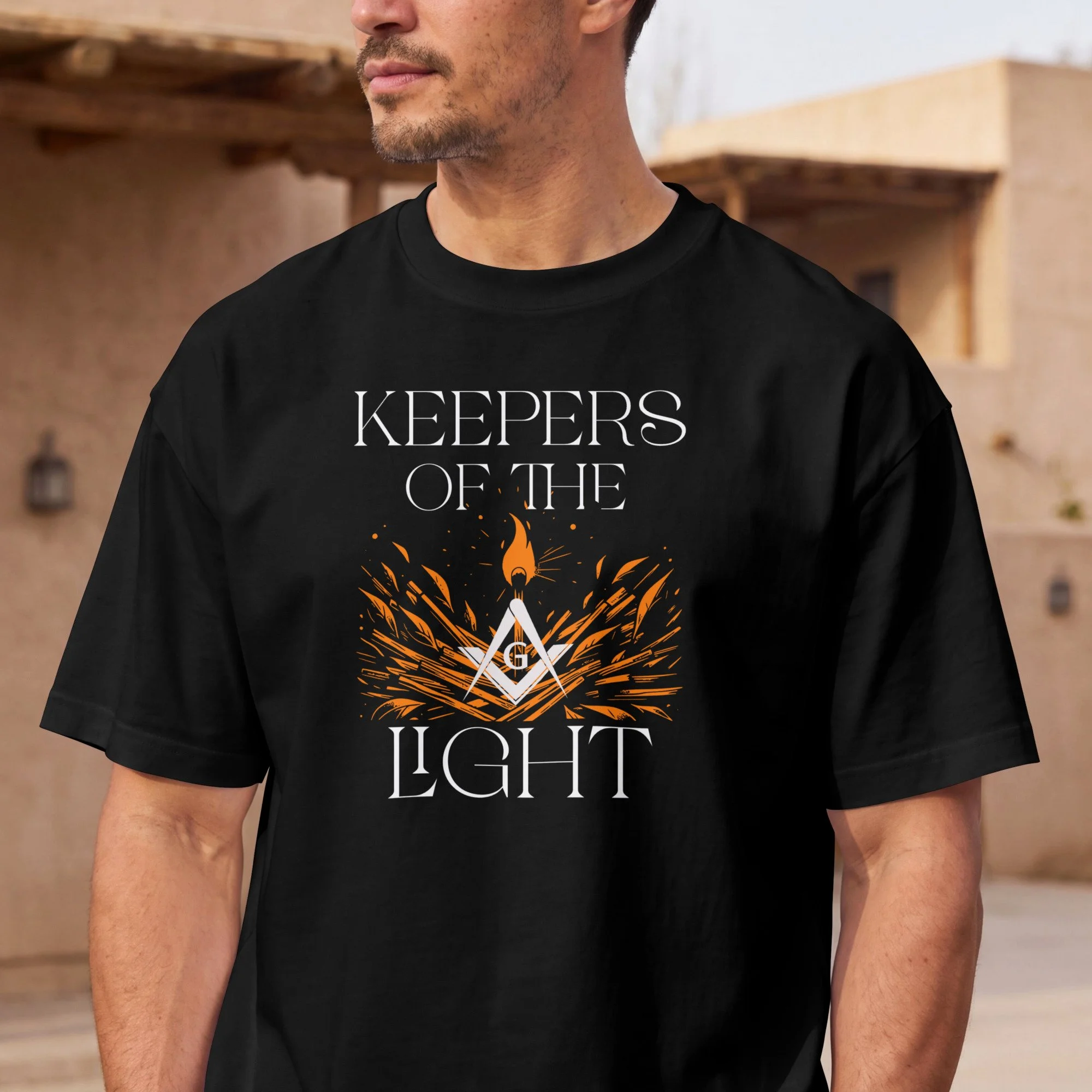
For those who keep the light alive. https://www.buriedexpectations.com/blog/keepers-of-conscience
Product features
- 100% ring-spun cotton for a soft, lightweight feel (varies by color blends)
- Tubular knit construction—no side seams for a cleaner drape
- Ribbed, elastic collar with shoulder tape to prevent stretching
- Durable, print-ready fabric with DTF/DTG printed details (sleeve and neck labels printed with DTF)
- OEKO-TEX® STANDARD 100 certified; EU 2-year warranty and compliance with safety standards
Care instructions
- Do not dryclean
- Do not bleach
- Tumble dry: low heat
- Iron, steam or dry: low heat
- Machine wash: cold (max 30C or 90F), with similar colors
Sources & Image Credits
Sources
Clement XII. In Eminenti Apostolatus Specula (papal bull). Rome, 28 April 1738.
Jouin, Ernest (Msgr.). Address of 8 December 1930.
Boniface VIII. Unam Sanctam (papal bull). 1302.
The Nag Hammadi Library in English. Ed. James M. Robinson. Leiden: Brill, 1977.
Lemkin, Raphael. Lemkin on Genocide. Ed. Steven Leonard Jacobs. Lanham: Lexington Books, 2012.
Mackey, Albert G. An Encyclopedia of Freemasonry. 1873.
The Holy Bible. John 2:19–21; Luke 17:21; Matthew 7:7.
2023 Vatical condemnation: https://www.vatican.va/roman_curia/congregations/cfaith/documents/rc_ddf_doc_20231113_richiesta-cortes-massoneria_en.html
Image Credits
Cover: original illustration.
In Eminenti (1738), front page: Vatican, Public domain, via Wikimedia Commons
Tenue au XVIIIè Siecle: http:ledifice.net, Public domain, via Wikimedia Commons
Cathars / Albigensian Crusade: Workshop of Master of Boucicaut, Public domain, via Wikimedia Commons.
Gothic cathedral or vesica piscis: Diliff, CC BY-SA 3.0 <https://creativecommons.org/licenses/by-sa/3.0>, via Wikimedia Commons.
Groenbaek Kalkmaleri detalje: user:Nico-dk / Nils Jepsen, CC BY-SA 3.0 <http://creativecommons.org/licenses/by-sa/3.0/>, via Wikimedia Commons
Vesica piscis aire: Robert FERREOL, CC BY-SA 4.0 <https://creativecommons.org/licenses/by-sa/4.0>, via Wikimedia Commons
Great Pyramid interior: John and Morton Edgar, Public domain, via Wikimedia Commons.